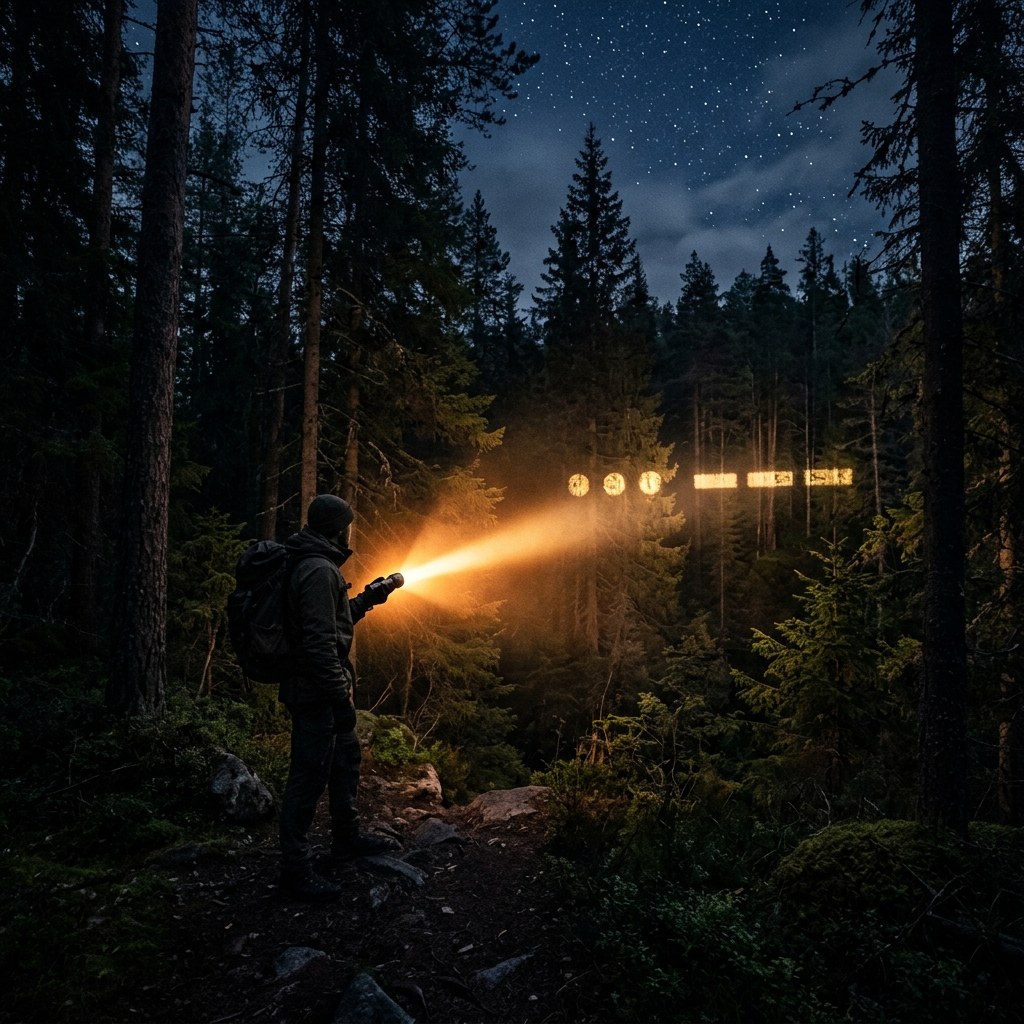
In a survival situation, communication can be the difference between life and death. Knowing how to send an emergency morse code distress signal is one of the most valuable outdoor survival skills you can acquire. Let's look at the patterns you must know and how to signal for help using light and sound.
The Universal Signal: SOS (... --- ...)
The most important pattern in emergency morse code is SOS. Contrary to popular belief, SOS does not stand for "Save Our Souls" or "Save Our Ship." It was chosen by the International Radiotelegraph Convention in 1908 simply because three dots, three dashes, and three dots make a highly recognizable, rhythmically distinct sound signature: dit-dit-dit dah-dah-dah dit-dit-dit.
How to Send SOS in an Emergency
The beauty of SOS is its absolute simplicity. You can transmit this signal using almost any medium:
- Sound: Use a whistle, car horn, or metal pipe. Blow three short blasts, three long blasts, and three short blasts.
- Light: Use a flashlight, mirror, or vehicle headlights. Flash the light three times quickly, three times slowly, and three times quickly.
- Visual Markers: If you are lost in the wilderness, you can lay out logs, rocks, or snow in the shape of three dots, three lines, and three dots for rescue planes.
For a complete breakdown of its historical context and signaling rules, check out our comprehensive SOS Morse Code Guide.
Other Emergency Signals to Know
While SOS is the universal standard, radio operators also use other indicators. HAM radio operators use "CQD" (the older distress call) and "MAYDAY" (derived from the French m'aidez, meaning "help me") in voice communications. In Morse code, always stick to the clean, unmistakable SOS pattern.
Practice Before You Need It
Do not wait for an emergency to learn these signals. Take five minutes to practice tapping out SOS with your fingers or a flashlight. You can also use our interactive Visual Flash Tool to see exactly how the timing of dots and dashes is structured in visual communications. A little practice today could save a life tomorrow.